Sub-Total: $0.00
Shortage of Concealed Carry Handgun Training
Setting the Stage: Why Training Matters
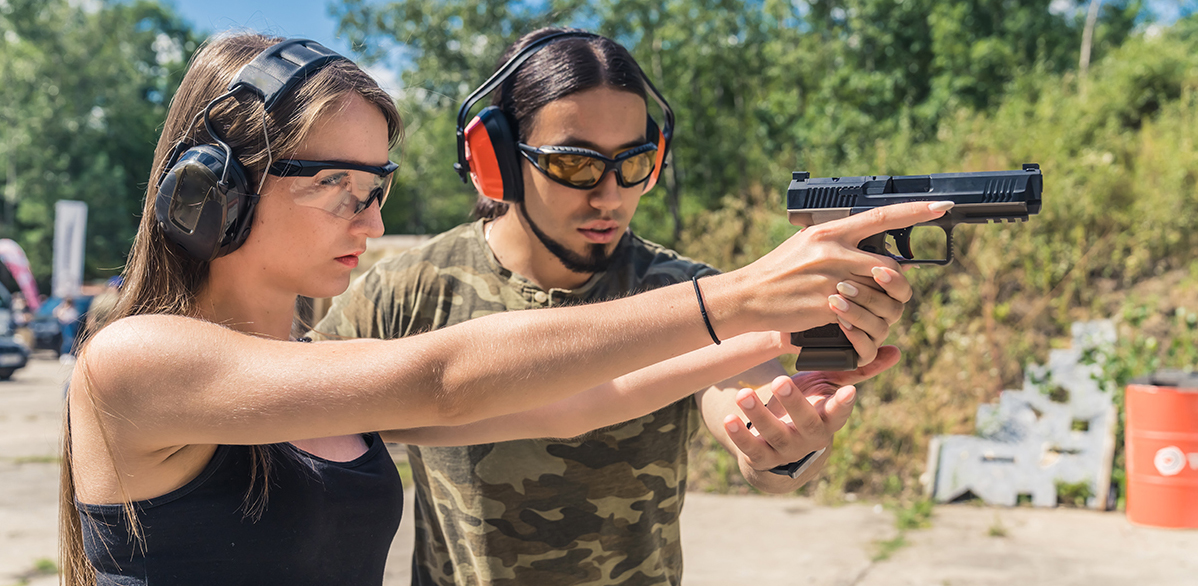
At Mountain West Firearms, one of our key goals since opening has been to provide quality firearms education. Our academy space was built for exactly that — a comfortable, professional environment where citizens can come to learn about firearms, safety, and the responsibilities that come with exercising their Second Amendment rights. Among the many courses we planned to offer, the one most frequently requested has been the state-mandated concealed carry handgun permit class.
In North Carolina, before anyone can even begin the application process for a concealed handgun permit, they must complete an approved training course and receive a certificate from a state-certified instructor. That requirement ensures permit holders are educated on firearm safety, laws regarding self-defense, and the ethical use of force. It’s a fair and necessary part of responsible gun ownership — or at least, it was, until bureaucracy got in the way.
For decades, the system worked. Instructors applied through the Commission for Judicial Education and Training Standards (CJETS), completed their credentials, and began teaching. The process wasn’t fast, but it was functional. Then, in early 2024, the entire framework for certifying new instructors ground to a halt — not because of a lack of interest or capability, but because of a regulatory tangle between two state agencies.
What Happened: The Bureaucratic Breakdown
To understand how this happened, we need to look at the two agencies at the center of the problem. On one side, you have CJETS, the commission responsible for establishing standards and approving instructors for concealed carry courses. On the other side is the North Carolina Rules Review Commission, which reviews and codifies the rules created by agencies like CJETS into the North Carolina Administrative Code — the official rulebook for how state programs operate.
For years, CJETS managed the concealed carry instructor program successfully under a set of administrative rules. These rules detailed everything from instructor qualifications to curriculum standards. In early 2024, CJETS decided it was time for an update — mostly minor administrative changes, like adding recognition for certain NRA or USCCA courses, and clarifying requirements that had been in place for years. Nothing about the intent or structure of the program was supposed to change.
However, when CJETS submitted those updated rules for review, the Rules Commission took an unexpected stance. Instead of approving the updates, they repealed the existing rules entirely and refused to codify the new ones. Their reasoning? A single word in the state statute — guidelines.
According to the Rules Commission, because the law said CJETS could issue “guidelines” rather than “rules,” the agency lacked the legal authority to create enforceable regulations. And just like that, the entire concealed carry instructor certification process collapsed. Without official rules on the books, CJETS could no longer accept applications for new instructors. They could only renew existing ones. Every prospective instructor in the state — including myself — was left in limbo.
Why the Word “Guidelines” Matters
At first glance, the difference between guidelines and rules might seem trivial. But in government terms, it’s everything. Rules have the force of law — they’re enforceable, codified, and provide structure for agencies to operate. Guidelines, on the other hand, are advisory. They lack legal authority unless the legislature specifically authorizes them to be treated as binding.
For decades, CJETS operated under the assumption that its guidelines functioned as rules, and nobody objected. The system worked fine, instructors were certified, and citizens got their training. Then, in 2024, the Rules Commission decided to take a literal interpretation of the statute and declared that CJETS had overstepped its authority. By repealing the old rules and refusing to publish new ones, they effectively erased the framework that allowed the concealed carry training program to operate.
The result was what I like to call a bureaucratic stalemate — one agency says they can’t act without rules, and the other refuses to approve any rules. Meanwhile, the public pays the price.
The Legal Tug-of-War Between State Commissions
What makes this situation even more absurd is that both of these commissions operate under the North Carolina Department of Justice, overseen by the Attorney General’s Office. So, when CJETS decided to sue the Rules Review Commission to break the impasse, you had one state agency suing another — both represented by the same Attorney General.
The lawsuit went before a district court in Wake County, where the judge sided with the Rules Commission, affirming their position that CJETS lacked authority to issue rules. But in a nearly identical case involving the North Carolina Coastal Resources Commission, a different judge reached the opposite conclusion. The Coastal Commission faced the same argument — that they didn’t have the authority to issue rules — yet that court decided they did.
So now, in the same state, under nearly identical circumstances, two different courts have issued two contradictory rulings. The end result? Total confusion, no resolution, and thousands of North Carolinians left without access to the training they’re legally required to complete before applying for a permit.
The Real-World Impact on Concealed Carry Applicants
This bureaucratic battle might sound like an obscure legal dispute, but its consequences are very real. Every day at Mountain West Firearms, we get customers asking when they can take our concealed carry course. They’re eager to get trained, follow the law, and exercise their right to self-protection responsibly. But right now, we can’t certify new instructors — meaning we can’t offer the class without partnering with someone who already holds a valid, active certification from before the freeze.
For a state that still requires concealed carry permits, this situation effectively restricts access to the right to carry. It’s not that the state is banning guns or denying permits outright — it’s doing something more subtle: cutting off the pipeline that allows law-abiding citizens to qualify for a permit in the first place.
If you can’t take the class, you can’t get the certificate. If you can’t get the certificate, you can’t even apply for your permit. The result is a de facto restriction on concealed carry through administrative paralysis.
The Political Undercurrents
It’s hard to discuss this issue without acknowledging the political climate surrounding it. North Carolina, like much of the country, is divided on gun rights. With Democrats currently holding the Governor’s office and the Attorney General’s office, there’s a perception — fair or not — that the state’s leadership isn’t in a hurry to fix this problem. After all, a lack of instructor certifications means fewer concealed carriers, which aligns with the political goals of those who favor stricter gun control.
I’ve personally written to local lawmakers, including both my state representative and senator, explaining the issue and urging them to introduce a simple amendment to the statute. All it would take is a one-sentence change — replace the word guidelines with rules — and the system could start functioning again. That’s it. But despite multiple letters and follow-ups, I’ve received no response.
When silence is the only answer from elected officials, it’s hard not to wonder if this gridlock isn’t just an oversight — but a deliberate stall.
The Legislative Fix That Could End It All
The most frustrating part of this situation is that the fix is so simple. If the legislature amended the statute to explicitly authorize CJETS to “adopt and publish rules and regulations,” the Rules Review Commission would have no legal basis to reject them. The concealed carry instructor certification process could resume immediately, and North Carolina’s training infrastructure could start recovering within weeks.
But until that happens, we remain stuck. Two commissions are locked in legal conflict, the Attorney General’s office is stretched between them, and citizens are caught in the middle. The problem doesn’t require years of litigation or study — just legislative attention.
Unfortunately, that attention seems to be in short supply.
The Broader Principle: Rights Require Accessibility
This issue isn’t just about training or paperwork. It’s about the principle that rights must be accessible to be meaningful. The Second Amendment guarantees the right to keep and bear arms, and while states can regulate the manner in which that right is exercised, they also have a responsibility to ensure that lawful pathways remain open.
If a state requires training as a condition of exercising a right, then that training must be reasonably available. By allowing this impasse to continue, the state is effectively denying people the ability to comply with the law — a situation that undermines both the rule of law and public trust in government.
Imagine if the DMV suddenly stopped certifying new driving instructors. You could still legally drive, but no one could get a new license because there were no certified trainers. That’s essentially what’s happening here, except it affects a constitutional right rather than a privilege.
How Mountain West Firearms Is Responding
Despite the challenges, we haven’t given up. At Mountain West Firearms, we’ve partnered with a currently certified instructor who is still recognized under the old system. This instructor travels to our facility to teach concealed carry classes while we assist and provide the venue. For now, it’s a temporary workaround that allows us to serve the community and keep training available, even if only on a limited basis.
Because of the travel involved, we can only host one course per month for the time being. It’s far from ideal, but it’s better than leaving our customers with no options at all. Every student we train represents another responsible, educated citizen who understands the laws and responsibilities of carrying a firearm.
Our hope is that the state will soon resolve this bureaucratic mess so we can expand our training schedule, certify new instructors, and continue building a culture of safe, lawful firearm ownership in North Carolina.
A Call to Action for North Carolina Lawmakers
If you’re reading this and you care about your right to self-defense, I encourage you to speak up. Contact your state representatives and senators. Ask them to look into this issue and push for an amendment to the concealed carry training statute. Remind them that constitutional rights don’t exist in theory — they exist in practice, and practice requires access.
For lawmakers, this should be an easy, bipartisan fix. Whether one supports concealed carry or not, every legislator should agree that when the state imposes a requirement, it also carries the responsibility to make compliance possible. Right now, it’s not.
The Bigger Picture: Rights and Responsibility
At the end of the day, this issue represents a fundamental truth about freedom: rights come with responsibility, and responsible citizens need fair access to the tools and training that allow them to exercise those rights safely. The concealed carry training program isn’t about handing out permits; it’s about ensuring that those who carry do so with knowledge and accountability.
Government exists to serve the people — not to obstruct them through inaction or ambiguity. North Carolinians deserve better than a system frozen by semantics and indifference. We deserve leadership willing to fix problems when they arise, not ignore them because they’re politically inconvenient.
At Mountain West Firearms, we’ll keep doing our part to educate, equip, and empower the community. But we need our state to do its part too — by clearing the path for new instructors, restoring training accessibility, and upholding both the spirit and the letter of the law.
Final Thoughts
The current stalemate between CJETS and the Rules Review Commission is more than an administrative hiccup. It’s a test of how seriously our state takes its obligations to its citizens. If lawmakers truly believe in public safety, they must act swiftly to restore the concealed carry training framework. If they believe in constitutional rights, they must ensure those rights can be lawfully exercised.
Until then, the people of North Carolina — law-abiding gun owners, prospective permit holders, and instructors alike — remain stuck in a system that has failed them. It’s time to fix it.